AR try-on for your furniture catalog
Turnkey — no 3D team on your side
Your shopper points a phone and the sofa, wardrobe or kitchen unit stands in their room at real size. We make the models — from your sketches, drawings or photos.
- No prepayment
- Model rights are set by a clear licence
- Works on iPhone and Android, no app
Continue on your phone
Point the camera — the model stands in your room at real size, with no app and without visiting your website.
Or open the page of this model: p/sofa.html
Why a good catalog leaves money on the table
Three reasons a shopper closes the tab instead of ordering. Trying the piece in the room removes them before the measure and the delivery.
The top reason for returns and refused deliveries on case furniture above $800: on a photo the color and the scale are always wrong. Try-on removes that risk before the order — people buy what they have already “placed” at home.
A return and a refused delivery are the most expensive line in your price list
The factory has drawings, renders and warehouse photos. A studio charges $60–150 for one model and takes a week.
A photo on a white background is no different from your competitor's. A link with try-on is different — and it's a pleasure to send one to a client.
How many people opened the try-on and what happened to their order afterwards — visible in a report, not by eye. The argument with marketing ends faster.
Before and after: catalog photo vs try-on
On the left — how the product looks today at most manufacturers. On the right — the same sofa in a live widget: you can turn it and put it in your room.
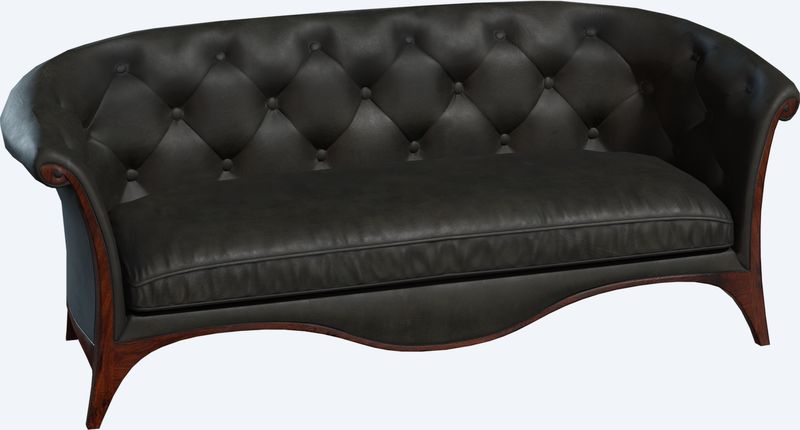
Rotate it, look from any angle and put it in your own room — on the floor, at real size.
How it works
You only take part in the first step: send what you already have. Everything else is on our side.
- 1
You send what exists
A sketch, a drawing, a warehouse photo, an export from COMPAS, bCAD, PRO100, Kitchen Creator, 3ds Max or Blender. Any shape — nothing has to be cleaned up.
You: 20 minutes - 2
We build the model
A photorealistic model with fabric, wood and metal, in real dimensions, checked before publishing. First piece — from 1 working day.
Us: from 1 working day - 3
You get product pages
A product page at
Pilot: 5 pieces in 7 working days/p/name: 3D on the desktop, in-room try-on from a phone, a QR for the price tag, sizes and colors. - 4
You sell and see the numbers
The link gets thrown to the client in a messenger, the shopper tries it on and orders. The cabinet shows a monthly funnel of views, AR launches, CTA clicks and leads.
Timing for additional items is agreed after materials are received
What platforms that already have 3D report
This is published data from platforms and retailers, not our promise. Your own effect is measured on the pilot — on your own products.
conversion for products with 3D/AR versus plain photos
Shopify, merchant data · 2022purchase conversion after try-on — the Wayfair “View in Room” case
Wayfair case · 2020furniture returns after AR and 3D visualization went live
Vertebrae (Snap), meta-analysisaverage order value when the buyer “placed” the piece at home
Wayfair case · 2020Methodologies differ: some A/B on product cards, some cohorts of “tried on versus didn't”. All sources, with links, are dissected in the article “AR by the numbers: conversion, returns, order value”. Judge by your own numbers after the pilot, not by somebody else's.
What the cabinet measures
The cabinet records product views, AR launches, CTA clicks, leads and model loading errors. It shows usage and response times, not causal sales uplift.
- 1
Product activity
Events are grouped by SKU and session to show product views and AR launches in the client report.
View · AR launch · CTA · lead - 2
Lead handling
The report shows new inquiries, status changes and the time until a manager first responds.
Lead · status · response time - 3
Loading issues
Known model loading errors appear in the report to help find products that need a technical check.
Load errors by model - 4
Recommendations
When activity is too low, the report says it is too early to draw conclusions. Otherwise it suggests simple operational next steps.
Monthly report
Turnkey is not a widget — it is a working catalog
The shopper opens the link and immediately places the furniture at home — nothing to download, no sign-up.
Dimensions change with sliders — inside the try-on too. Colors match your Kronospan and EGGER boards or your own fabric samples.
A rep sends the card in a messenger — the client tries it on without opening any website.
A product card with 3D and try-on right inside the conversation between the salon and the client.
From the same model — a 360° turntable clip for marketplace listings. One source: site, marketplace, try-on.
Standalone product pages that work even without your website; ready packages for You can copy HTML to embed a published web model. Ready CMS integrations and catalog export are in development.
The monthly cabinet report shows product views, AR launches, CTA clicks and leads.
For technologists: formats, weight and what exactly you get
- We accept: sketches and photos with dimensions, STEP, exports from COMPAS-3D, bCAD,
PRO100, Kitchen Creator, 3ds Max, Blender; you get back
GLBandUSDZ. - Materials are physically correct (PBR), matched to color samples including LAB values; the frame and the clearances follow the drawing.
- File size depends on the model. We check the web version on target devices before publication.
- Try-on: Quick Look on iOS, Scene Viewer and WebXR on Android, mouse rotation and fullscreen on desktop.
- Parametrics: from one source we build a model for a specific niche (2180×590 instead of 2200×600) without modelling it again.
- Widget and AR events are recorded for the cabinet report. Client webhook integrations are in development.
A studio, in-house, or a subscription
We counted not “prettier” but cheaper and faster: what it comes to for a catalog of 30 items.
The table is wider than the screen — scroll it sideways.
| Criterion | 3D studio | In-house | MebelARfurniture makers' pick |
|---|---|---|---|
| Price per model | $60–150 | a 3D specialist's salary plus software | from $35 one-off or inside a subscription |
| Time to the first piece | a week or more | until you hire and set it up | from 1 working day |
| Do you need a 3D team | your contractor is one | yes, in-house | no |
| Try-on and QR included | a separate task at a separate price | you need your own hosting and support | yes — pages and QR right away |
| Analytics | none | if you set it up yourself | monthly funnel report |
| Who owns the models | per contract, often with restrictions | you | you — as files |
| New items | re-agree the estimate | a queue inside the company | timing agreed after materials are received |
| Total for a catalog of 30 items | $1,800–4,500 one-off | salary plus software — every month | $169 / month — up to 50 models |
Prices and lead times are typical for the market; the specifics depend on how complex the piece is.
The technical part — formats, weight, optimization — is on us; from your side we only need drawings, sketches or photos.
The subscription is production, hosting and support
Pages run on our infrastructure. File-delivery terms depend on model origin and license: client-provided models are available to download; MebelAR-created models follow the contract terms.
one showroom or product line
Launch: first 10 models — $149 one-off
- up to 10 hosted models
- product pages with try-on and QR
- shareable links for reps
- 1 site or showroom
a manufacturer with a full price list
contract terms agreed individually
- up to 50 models
- colors and dimensions per model
- monthly funnel report in the client cabinet
- team access, leads and a monthly report in the cabinet
- new item timing agreed after materials are received
a factory or a chain of showrooms
quoted after a catalog audit
- catalog scope and terms agreed after an audit
- Catalog integrations — in development
- client cabinet for models, leads and reports
- custom production workflow by agreement
per piece — if you need one batch without a subscription: a sketch, photo or drawing → a photorealistic model plus a page with try-on.
pilot — up to 5 of your pieces in AR within 7 working days after complete materials are received. $0, with no paid-service commitment.
Calculator: which plan covers your price list
Up to 50 models with colors and dimensions, team access, leads and monthly cabinet report. Timing for additional items is agreed after materials are received.
Need something you can forward to management or paste into a work chat? Download the presentation and price list (PDF, in Russian).
See it through the shopper's eyes
An open storefront with size and color try-on — exactly what your customers will get.
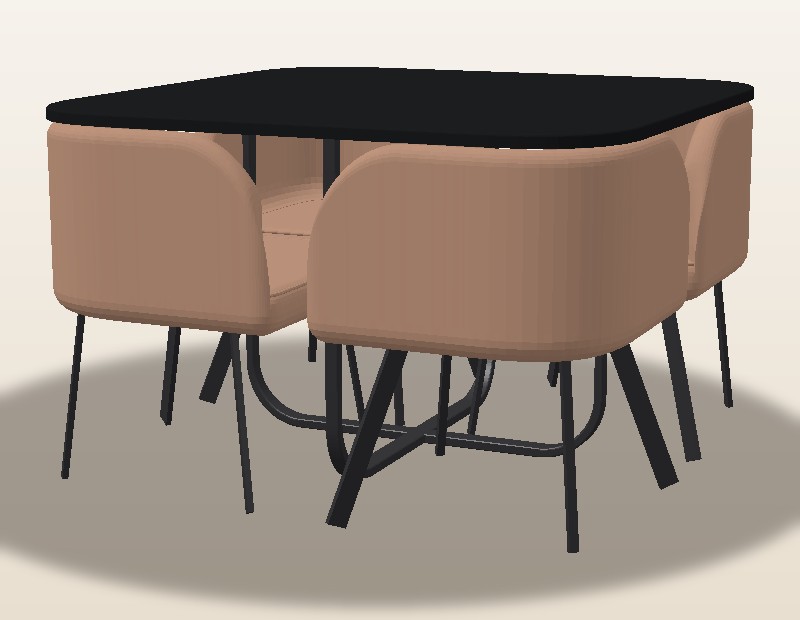 QUADRON · 3D/AR storefront
- Open the demo catalog storefront
- Check it on your own phone — from a QR scan
- Client storefront “Nord”
- Cases: what changes inside a product card
Models and try-on work for real on all these pages: the same files that would go into your catalog. The surrounding interface is Russian for now.
What manufacturers ask most often
What does the pilot cost and what do I get?
$0. The pilot is up to 5 of your pieces in AR within 7 working days after complete materials are received, with no paid-service commitment. You get working product pages with try-on, QR codes, links for your reps and a report on views and try-on launches. File-delivery terms are agreed separately.
We have no 3D models at all. Where do we start?
With photos and dimensions. For a pilot a product spec sheet or a showroom photo is enough — we build the model from a sketch. Drawings and exports from COMPAS, bCAD, PRO100 or 3ds Max make the process cheaper.
Do customers need to install anything?
No. On iPhone and Android try-on opens with built-in tools — no apps and no accounts. On desktop the model rotates with the mouse and opens on a full screen.
What about old phones or slow internet?
A card weighs little enough to open even on weak mobile internet; when AR is unavailable the page shows plain 3D and a QR code. Pages live on our side and don't depend on the speed of your website.
Who owns the models and the pages?
Client-supplied models remain downloadable. For models made by MebelAR, the licence type and download right are shown in the cabinet: an annual licence includes delivery after 12 paid months, while a monthly licence requires an explicit permission or buyout. The draft terms are subject to legal review.
How fast can we start?
Pilot — up to 5 pieces in 7 working days after receiving complete materials. Timing for additional items is agreed based on scope and materials.
How do we know AR pays off?
The cabinet has a monthly report on views, AR launches, CTA clicks, leads, model activity and manager response time. It reports measured usage, not sales uplift.
Articles for people who are choosing
We break down the technology, the numbers and the practical side — with sources.
 Technology · 8 min
Furniture AR try-on: how it works on iPhone and Android
What the shopper sees, why no app is needed and which files make it work.
 Data · 10 min
Conversion, returns, average order value
Shopify +94 %, Wayfair +92 %, −40 % returns: methodologies, sample sizes and links to every study.
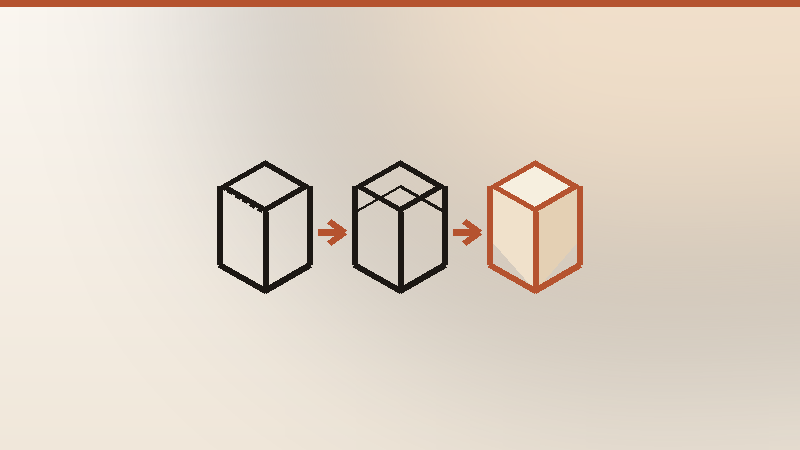 Production · 9 min
Furniture 3D models: formats, weight, optimization
Why a studio’s heavy render breaks on mobile internet — and what keeps a GLB at 1–5 MB without losing the look.
$0 pilot, no contract or commitment: 5 pieces in 7 working days
Send photos, sketches or exports of five models — we return working product cards with in-room try-on and a views report. The timeline starts when we receive the materials. You decide whether to continue after the pilot.
- What to send — 10 minutes on the checklist: what we need for a pilot
- To show management: presentation and price list (PDF)
- To touch it first: phone check · demo storefront
The checklist, the PDF and the tool pages are in Russian for now — on the call we walk you through them in English.